Ralf Schumacher is finding it difficult to change his views on the “danger” of IndyCar racing despite his nephew Mick Schumacher’s commitment to racing in the American series in 2026 having reiterated his stance following the announcement of Mick joining RLL earlier this week.
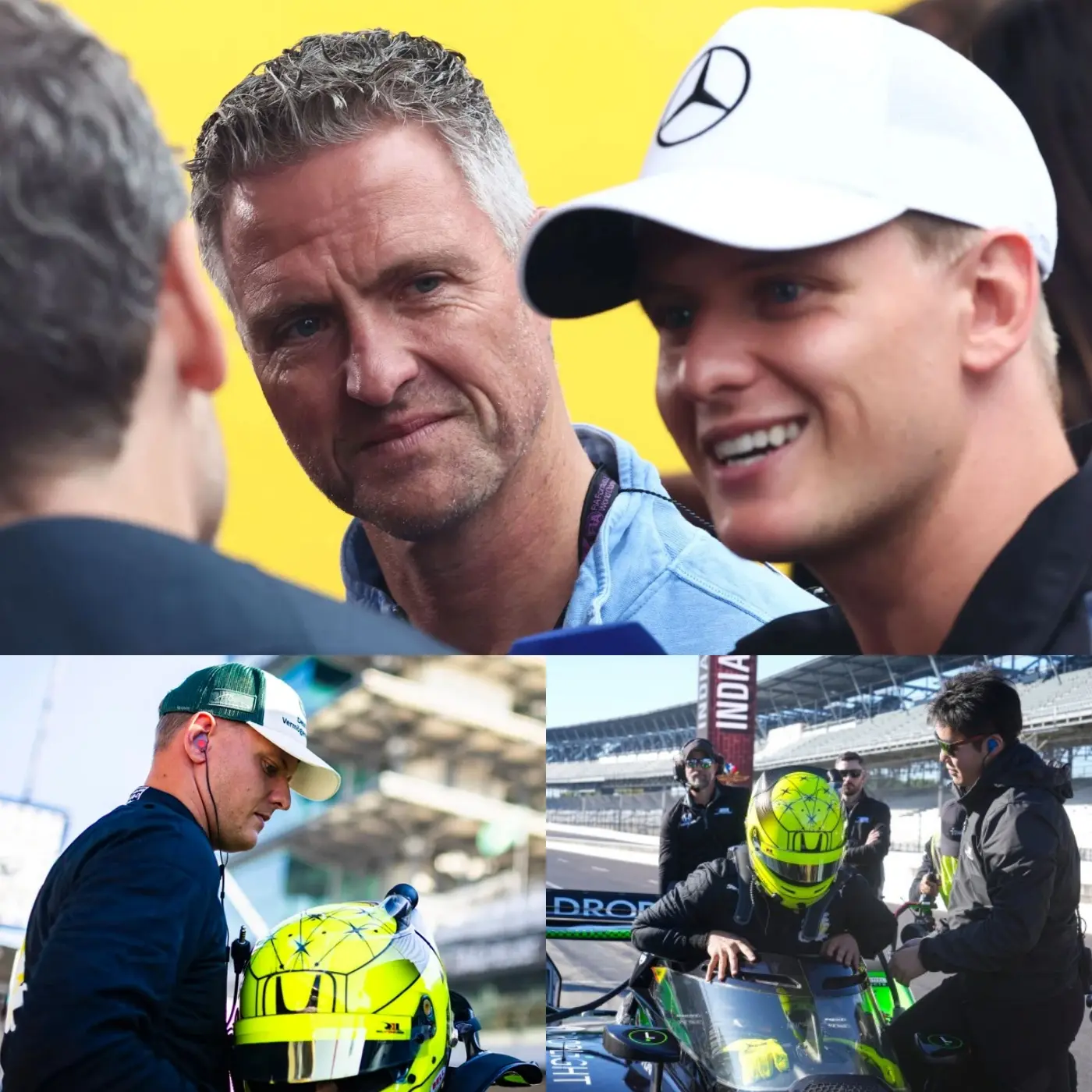
In the high-stakes world of motorsport, family ties often intersect with professional ambitions in ways that spark both inspiration and tension.
The latest chapter in the Schumacher saga exemplifies this perfectly: Mick Schumacher, the 26-year-old son of Formula 1 legend Michael Schumacher, has boldly committed to a full-season campaign in the NTT IndyCar Series for 2026 with Rahal Letterman Lanigan Racing (RLL).
Yet, his uncle, former F1 driver Ralf Schumacher, remains steadfast in his warnings about the inherent dangers of the series, particularly its oval tracks.
Ralf’s comments, delivered just days after the announcement on November 24, 2025, underscore a rift between protective familial concern and Mick’s unyielding drive to forge his own path.

The news of Mick’s move broke like a thunderclap in the paddock, catching even his new team off guard when an early press release slipped out prematurely. “That was a bit exciting,” Mick admitted with a wry smile during a media briefing, his Swiss-German accent laced with relief.
At 26, Mick carries the weight of a surname synonymous with seven world championships, but his career has been a rollercoaster of triumphs and setbacks.
After clinching the 2018 Formula 3 European Championship and the 2020 Formula 2 title with Prema Racing, he earned a seat at Haas in F1 for 2021 and 2022, where he notched 12 points across 43 starts but was hampered by crashes and inconsistency.
Post-F1, he served as a reserve for Mercedes and McLaren while racing prototypes in the FIA World Endurance Championship (WEC) with Alpine, securing three podiums in 2024 and 2025. Now, IndyCar represents a return to open-wheel roots, a chance to pilot the No.
47 Honda-powered Dallara chassis for all 17 races, including the iconic Indianapolis 500.
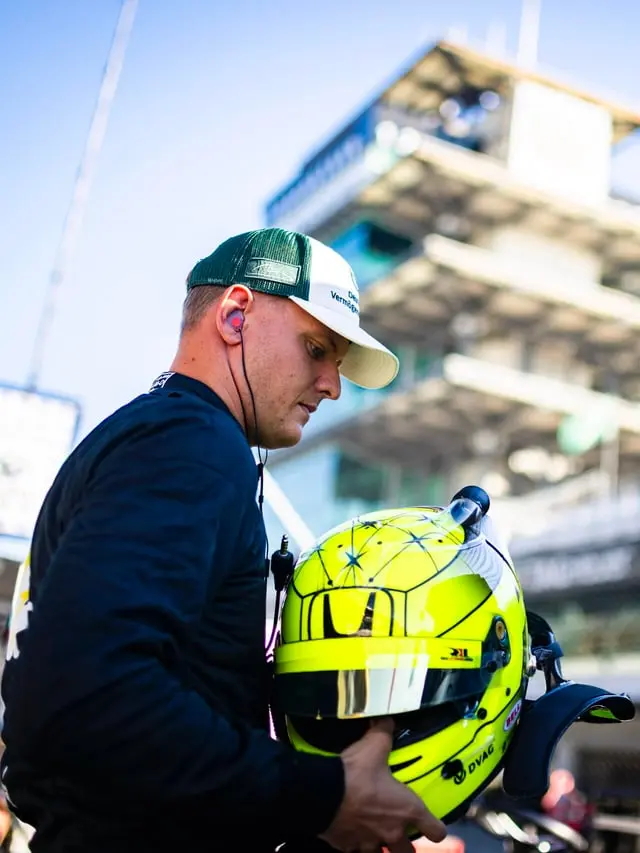
Mick’s decision wasn’t impulsive. It stemmed from a pivotal test session on October 13, 2025, at the Indianapolis Motor Speedway road course with RLL. What began as a four-day evaluation—complete with simulator runs and seat fittings—evolved into mutual admiration.
“His test with us on the IMS road course was exceptional—he impressed every single team member,” raved Bobby Rahal, the three-time IndyCar champion and RLL co-owner. “Everyone walked away determined to bring Mick into our program.” For Mick, the pull was visceral.
“Having both an F1 and an endurance background, I have insights and knowledge that will contribute to a great partnership,” he stated in the official release.
“I’m delighted to confirm I’ll be competing in the full season.” Joining teammates Graham Rahal (Bobby’s son and a 12-year IndyCar veteran) and Louis Foster (the 2025 Rookie of the Year), Mick slots into a revitalized RLL lineup.
The team, co-owned by Rahal, late-night icon David Letterman, and businessman Mike Lanigan, has undergone a renaissance since hiring former IndyCar president Jay Frye as team president mid-2025. Additions like Gavin Ward as special advisor and Brian Barnhart as VP of operations signal ambitions to challenge the series’ elite.
David Letterman, ever the showman, couldn’t resist a quip in his welcome: “I’m delighted to welcome Mick to the RLL family—a young man who has competed against some of the world’s greatest racers. With Graham, Louis, and now Mick, the future is limitless. I’m very excited for the 2026 season.
Still waiting for my seat fitting.” Mike Lanigan echoed the enthusiasm: “What a great addition! Mick has the skills and experience to enhance our competitiveness in one of the most demanding series.” The 2026 calendar kicks off March 1 with the Firestone Grand Prix of St.
Petersburg, weaving through road courses, street circuits, and six ovals—culminating in the 110th Indy 500 on May 24. RLL plans extensive preseason testing, including four oval sessions, to acclimate Mick to the series’ unique demands.
No stranger to high-speed duels, Mick’s road and street circuit prowess from Europe should translate well, but ovals loom as the great unknown.
Enter Ralf Schumacher, the voice of caution amid the celebration. The 50-year-old, Michael’s younger brother and a six-time F1 Grand Prix winner with Williams and Toyota, has long viewed IndyCar with skepticism.
Even before Mick’s test, Ralf voiced alarm in a Sky Deutschland podcast, questioning the move from Alpine’s stable WEC program. “I don’t really understand it,” he said at the time.
“He’s in great hands where he is now and can have a great future.” But it was the ovals that truly troubled him: speeds averaging 360 km/h, wheel-to-wheel contact with exposed tires, and a history of catastrophic crashes.
He recalled fatalities like those of Greg Moore in 1999 and Paul Dana in 2006, insisting, “Personally, it’s too dangerous for me.” Ralf even drew a line for his own son, David, an aspiring racer: “I wouldn’t allow him to compete in IndyCar—it’s too risky.”
Following the RLL announcement earlier this week, Ralf doubled down on the Sky podcast “Backstage Boxengasse,” as reported by Krone. “I still consider IndyCar very dangerous,” he reiterated. “But I understand him—he’s young, he wants to prove himself. I’m keeping my fingers crossed and hope nothing ever happens.
It’s a fact—at least in oval racing—that the speed is very, very high. Many have misjudged it.” Ralf’s stance echoes sentiments from Mick’s father, Michael, who in a resurfaced 2010s comment deemed IndyCar “too dangerous” due to its ovals.
The elder Schumacher, sidelined since a 2013 skiing accident, has rarely commented publicly on racing, making these echoes poignant. Ralf also questioned the long-term wisdom: transitions from IndyCar back to F1 are rare and fraught, citing Romain Grosjean’s successful but atypical shift as an outlier.
Instead, he advocated for the burgeoning LMDh category in endurance racing, where manufacturers like Ferrari, BMW, Cadillac, and Alpine converge globally.
Mick, undeterred, addressed the family chorus head-on during his media session. “Of course you can’t take it lightly—these are crazy speeds and tough duels,” he acknowledged. “But I consciously accept the risk to experience the joy of racing.
Motorsport in general is dangerous; I don’t see why one thing should be more dangerous than another.” He dismissed perceptions of IndyCar as a F1 dead-end: “Formula 1 is specific, but it’s still formula cars.
This move doesn’t close that door.” Mick’s test dispelled initial jitters; he found the car intuitive, its downforce forgiving compared to F1’s razor-edge handling. As for Ralf’s protectiveness, Mick framed it with maturity: “Family worries come from love. But this is my path.”
The contrast highlights a broader narrative in motorsport: the Schumacher legacy as both blessing and burden. Michael’s shadow looms large, but Mick has carved independence—first in junior formulas, now across the Atlantic.
Ralf’s critiques, while rooted in experience (he raced ovals in CART briefly in the 1990s), risk overshadowing Mick’s agency. Graham Rahal, Mick’s new teammate, offered a pointed rebuttal on social media: “Ralf’s been more hindrance than help to Mick’s career.
Let’s focus on the road ahead.” Fans on platforms like Reddit echoed support: “Good luck, Mick—not everyone conquers F1, but IndyCar could be his stage.”
For RLL, Mick’s arrival signals resurgence. Last victorious multiple times in 2019 with Takuma Sato, the team eyes podiums with its star-studded trio. IndyCar’s global appeal grows—former F1 talents like Grosjean and Marcus Ericsson thrive here—drawing eyes from Europe.
Mick’s oval inexperience is a hurdle, but with four tests planned, including at Texas and Iowa, adaptation seems feasible. Safety advancements, like the Aeroscreen introduced in 2020 post-Grosjean’s fiery crash, have mitigated risks, logging over 10,000 miles without incident.
As 2026 dawns, Mick Schumacher stands at a crossroads: honoring family caution or chasing unbridled speed. Ralf’s reluctance humanizes the glamour, reminding us that behind the helmets are hearts gripped by fear. Yet, in motorsport’s DNA lies defiance—the roar of engines drowning doubt.
Mick’s IndyCar odyssey promises thrills, perhaps vindication, and a testament that even Schumachers evolve beyond legacy. With the green flag waving in St.
Pete, the world watches: will danger define him, or will he redefine it? In the end, as Ralf conceded, “Paragraph one in motorsport: Everyone does their own thing.”