
Jordan Love and the Packers Beat the Lions’ Blitz Plan Through the Air

In a highly anticipated NFC North matchup, the Green Bay Packers showcased their aerial dominance, as quarterback Jordan Love and the offensive unit effectively dismantled the Detroit Lions’ blitz schemes.
The game, which had been billed as a tactical showdown between two offensively potent teams, turned into a masterclass in quarterback decision-making, offensive line adjustments, and strategic preparation.
Jordan Love, entering his second season as the Packers’ starting quarterback, had faced criticism early in his career for inconsistency and lack of composure under pressure. However, against the Lions, he displayed remarkable poise and command of the offense.
From the opening drive, it was evident that Love had meticulously studied Detroit’s defensive tendencies, particularly their aggressive blitz packages designed to force hurried throws and disrupt the rhythm of Green Bay’s passing game.
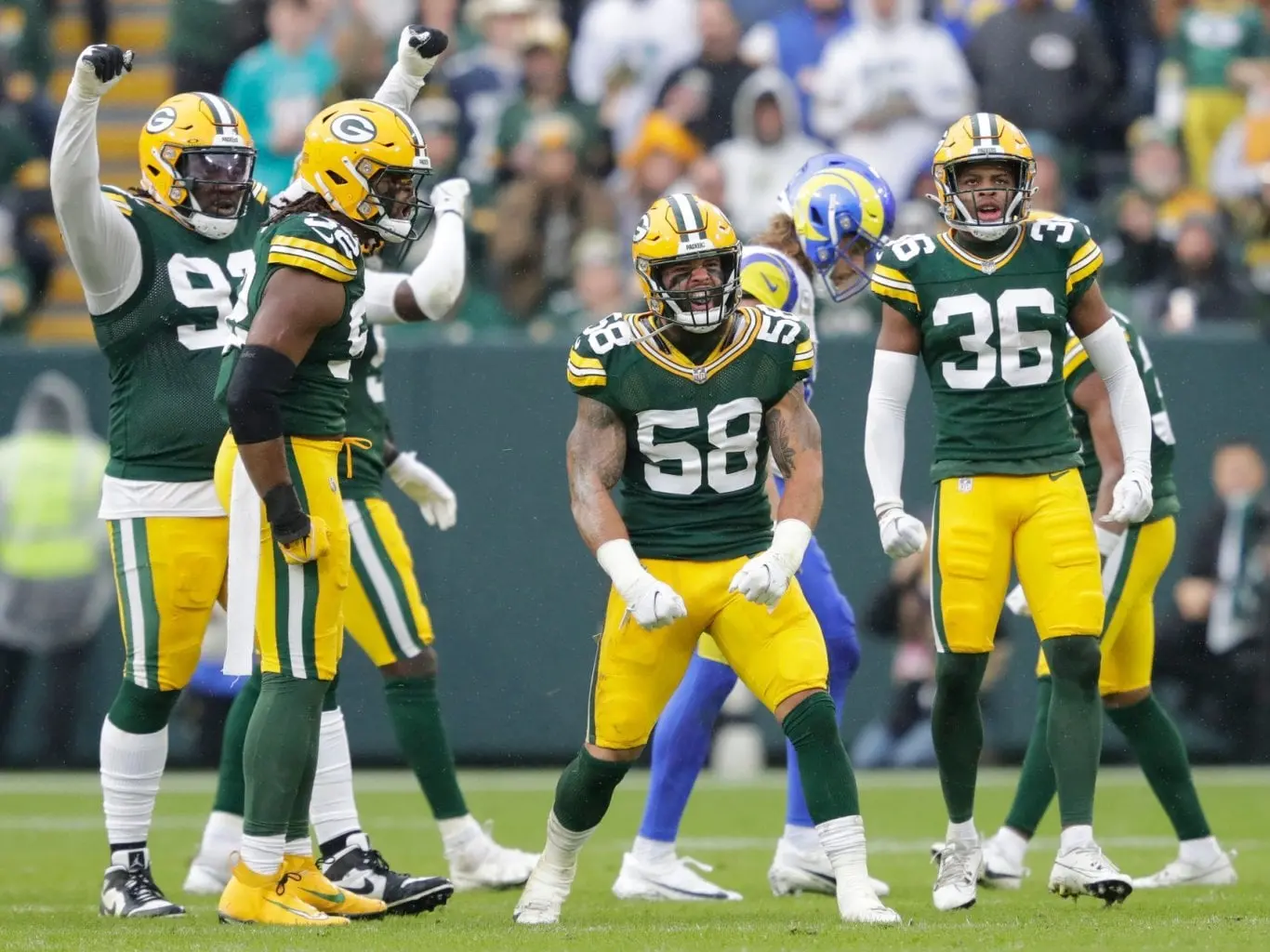
The Lions, known for their dynamic front seven and ability to generate pressure from multiple angles, aimed to overwhelm the Packers’ offensive line and force Love into mistakes.
Defensive coordinator Aaron Glenn had crafted a complex array of blitzes, mixing zone and man coverage, with linebackers and safeties crashing from unexpected angles. Early in the game, the strategy appeared effective, as Detroit managed to collapse the pocket on a few plays, limiting initial passing lanes.
However, Love’s preparation and adaptability quickly turned the tide.
One of the key elements in Love’s success was his ability to read the blitz before it fully developed. Using a combination of pre-snap adjustments, audibles, and rapid progression through his reads, Love was able to identify weak points in Detroit’s coverage.
On multiple occasions, he exploited mismatches in the secondary, targeting receivers running precise routes that capitalized on the vacated zones left by blitzing defenders.
This approach not only neutralized the immediate threat of the blitz but also forced the Lions to reconsider their aggressive strategy, as overcommitment often led to open passing lanes downfield.
The offensive line deserves equal credit. Left tackle David Bakhtiari, center Josh Myers, and the rest of the unit provided Love with the protection necessary to execute quick and decisive throws.
While the blitz occasionally broke through the first line of defense, the offensive line’s combination of slide protection, chip blocks from running backs, and pre-snap communication allowed Love to maintain his rhythm. The coordination between the quarterback and offensive line exemplified the importance of preparation and trust in high-pressure scenarios.
Wide receivers also played a critical role in beating the blitz. Christian Watson, Romeo Doubs, and Allen Lazard ran routes designed not only to stretch the field but also to provide Love with immediate options against incoming pressure.
Quick slants, crossing patterns, and deep outs allowed the quarterback to release the ball before defenders could reach him. Watson, in particular, demonstrated an uncanny ability to gain separation even against tight coverage, converting critical third downs and keeping drives alive.
The chemistry between Love and his receiving corps has become a defining feature of Green Bay’s offense.
Beyond individual performances, the Packers’ offensive coordinator, Luke Getsy, deserves credit for the game plan. Getsy implemented a scheme that leveraged Love’s strengths, including his accuracy on intermediate throws and ability to exploit mismatches in coverage.
By blending short, high-percentage passes with occasional deep shots, the offense kept the Lions guessing and prevented them from relying solely on pressure tactics. Play-action passes and motion pre-snap also added layers of deception, making it difficult for Detroit to commit fully to the blitz without risking exposure elsewhere.
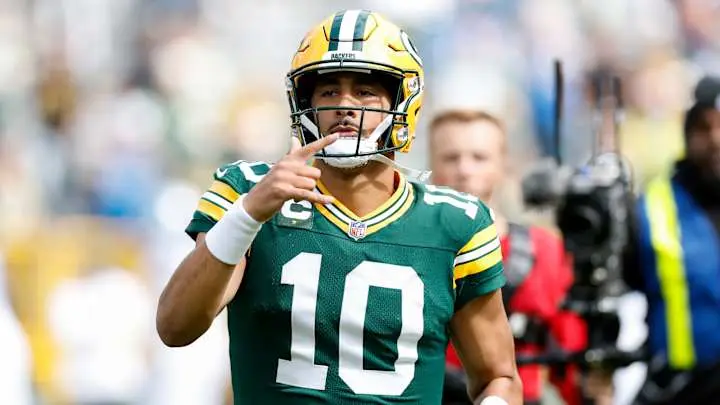
Statistically, the numbers reflect the effectiveness of Green Bay’s approach. Love completed a high percentage of passes, accumulated significant yardage, and avoided costly turnovers. The Packers converted multiple third downs under pressure, extended drives, and ultimately controlled the tempo of the game.
In contrast, the Lions’ blitz schemes, which had been a focal point of their defensive identity, yielded diminishing returns as the game progressed. Detroit’s inability to adapt mid-game allowed Green Bay to exploit their aggressiveness repeatedly.
From a tactical perspective, the matchup against Detroit serves as a case study in modern NFL offense. While blitzing remains a high-reward strategy, it carries inherent risks, particularly against quarterbacks who can quickly process information and make accurate throws under pressure.
Love’s performance highlighted the importance of preparation, film study, and in-game adaptability. The Packers demonstrated that with precise execution, a well-coordinated offensive line, and receivers running intelligent routes, even the most aggressive blitz packages can be neutralized.
The victory has broader implications for Green Bay’s season. As a team seeking to establish consistency behind a young quarterback, the ability to handle pressure and convert under duress is essential.
Beating a formidable opponent like the Lions, who have one of the most aggressive pass-rush schemes in the league, provides both confidence and validation for Love and the coaching staff.
It also signals to the rest of the NFC North that Green Bay’s passing attack cannot be contained simply by sending extra defenders after the quarterback.
Fans and analysts alike have lauded Love’s performance. Social media buzzed with praise for his poise, accuracy, and leadership. Commentators highlighted not only his statistical achievements but also his mental toughness and ability to remain composed under intense pressure.
Former players and coaches pointed out that beating a blitz-heavy defense requires a combination of preparation, skill, and trust among teammates—all of which Love displayed in abundance.
Looking ahead, the Packers will likely build on this blueprint. Future opponents may attempt similar blitz strategies, but Green Bay’s confidence in Love’s ability to dissect pressure will allow the coaching staff to refine their game plan further.
Continued development in offensive line cohesion, receiver timing, and pre-snap recognition will ensure that the team remains a challenging matchup for any defense.
In conclusion, Jordan Love and the Green Bay Packers’ performance against the Detroit Lions stands as a testament to preparation, execution, and adaptability. By effectively beating the blitz through the air, Love not only showcased his individual talent but also elevated the team’s overall offensive strategy.
The victory represents more than just a win; it signals the emergence of a quarterback capable of thriving under pressure and a franchise poised to compete at the highest level in the NFC North.
As the season progresses, Love’s ability to handle similar situations will be critical. The Packers have demonstrated that when preparation meets opportunity, even the most aggressive defensive schemes can be overcome.
For Green Bay fans, the game against Detroit serves as a reminder that the future of the franchise may be bright, guided by a quarterback who can outthink and outmaneuver defenses in high-stakes moments.