It’s Simple, Don’t Cheat: Pato O’Ward Delivers Candid Critique of Team Penske’s Indy 500 Scandal
In the high-octane world of IndyCar racing, where split-second decisions can crown champions or shatter legacies, integrity has always been the unspoken fuel powering the sport.
But as the dust settles on the 2025 season, the echoes of a scandal that rocked the Indianapolis 500 continue to reverberate, casting long shadows over the Brickyard and its overlord, Roger Penske.
The controversy, now laid bare in the gripping third season of the docuseries “100 Days to Indy,” has reignited debates about fairness, oversight, and the blurred lines between ownership and competition.
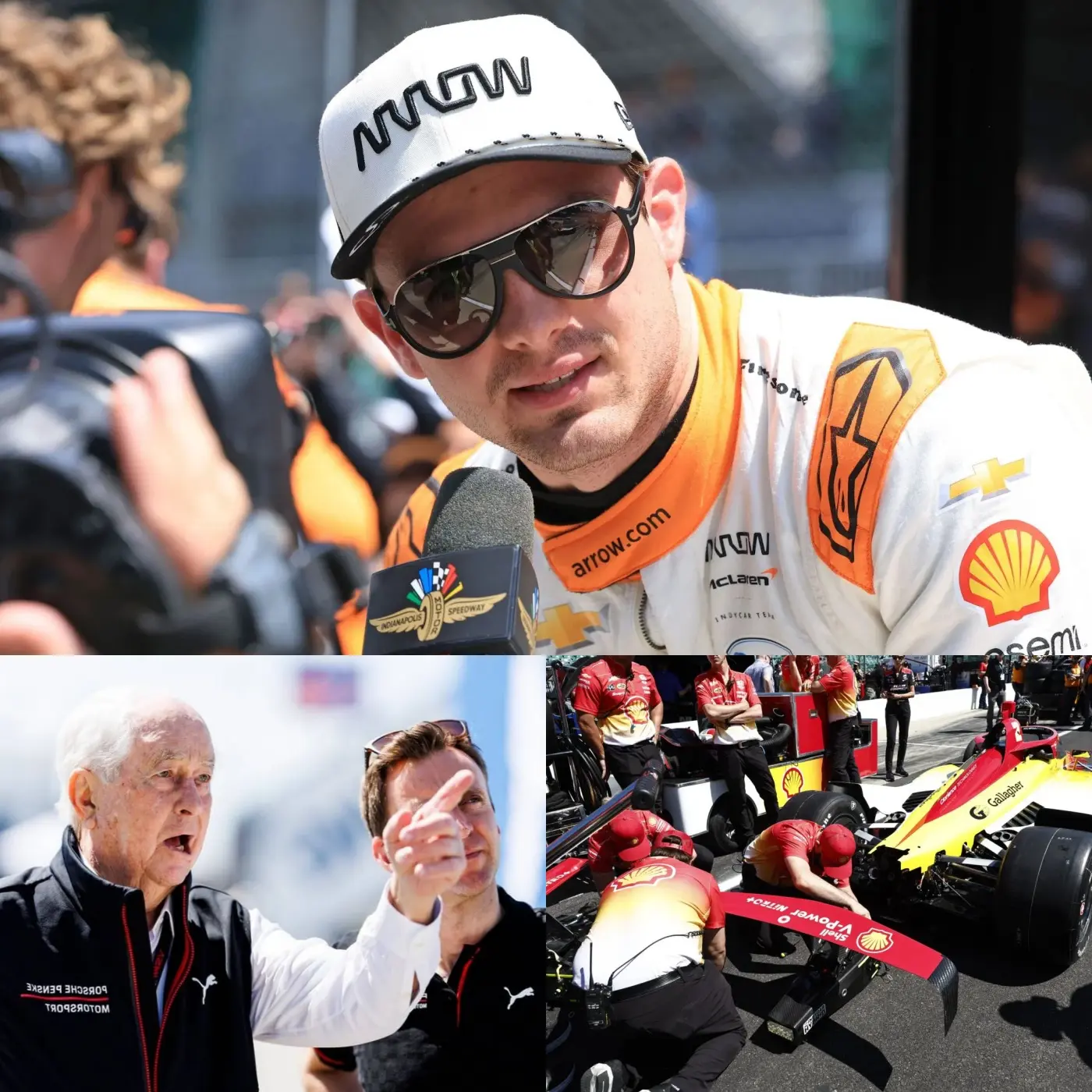
At its heart stands Arrow McLaren’s Pato O’Ward, the fiery Mexican driver whose unfiltered words—”It’s simple, don’t cheat”—have become a rallying cry for a paddock fed up with repeated infractions from the series’ most dominant team.
The saga unfolded in May 2025, just days before the 109th running of the Indianapolis 500, when technical inspectors uncovered a brazen violation on two Team Penske entries.
The cars of Josef Newgarden and Will Power, fresh off dominating early qualifying sessions, were found to have illegally modified rear attenuators—a spec safety component designed to absorb crash energy without alteration.
The modification, which involved filling and smoothing a seam between two pieces of the part, was dismissed by Penske officials as an “arbitrary” aesthetic tweak. But rivals saw it differently: a deliberate push against the boundaries of IndyCar’s spec-series rules, where uniformity is enforced to ensure parity.
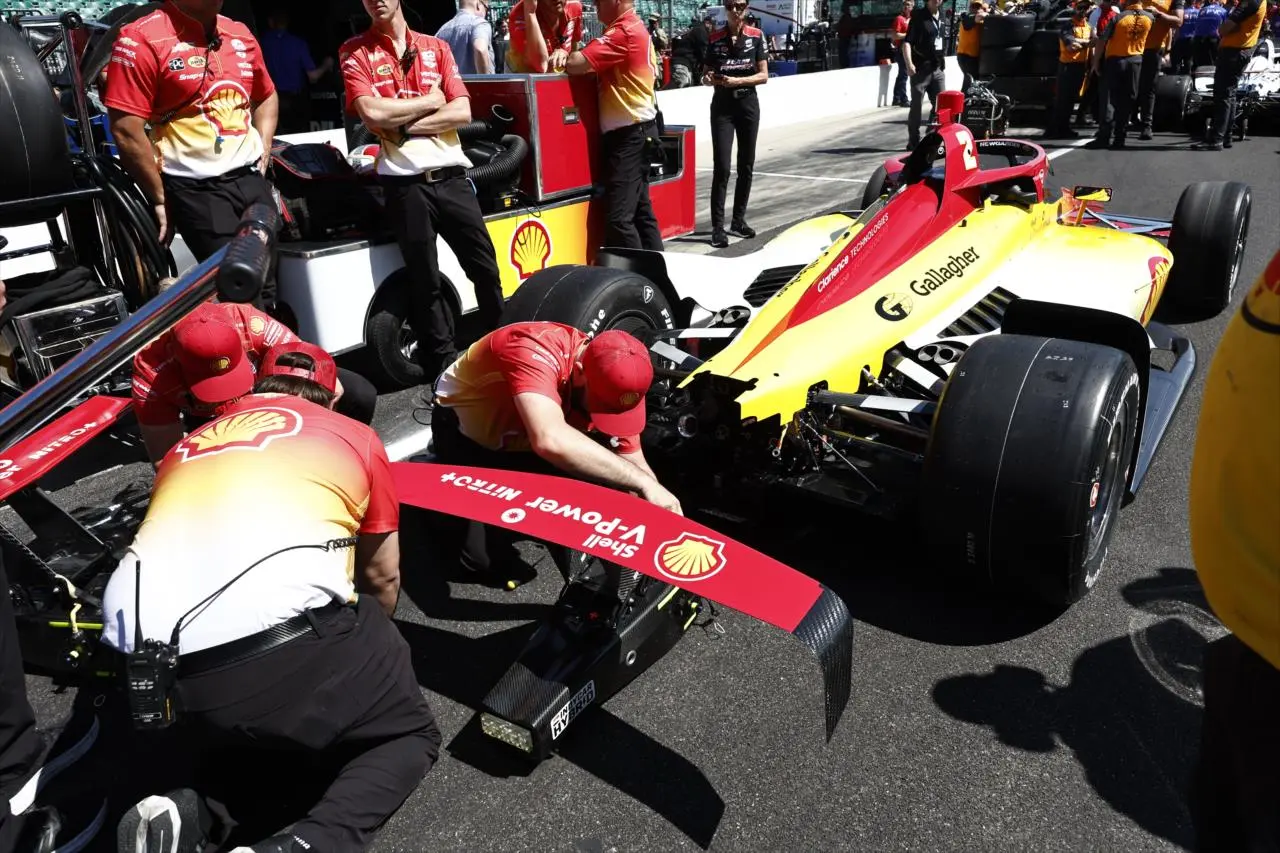
IndyCar acted swiftly, disqualifying the cars from the Fast 12 session and reassigning them to the back of the 33-car grid, alongside a third Penske machine sidelined by Scott McLaughlin’s heavy practice crash.
Fines totaling $200,000 were levied on the team, and strategists for both affected cars were suspended for the race. Yet, the penalties felt like a mere slap on the wrist to many in the garage area.
Photos surfaced showing the same infraction on Newgarden’s 2024 Indy 500-winning car, now enshrined in the Indianapolis Motor Speedway Museum. Further evidence suggested the modifications had been in rotation across Penske’s fleet for over a year, slipping past pre-race inspections undetected.
For O’Ward, who had battled Newgarden tooth-and-nail to the checkered flag in 2024 only to lose by a controversial last-lap pass, the revelation was a gut punch.
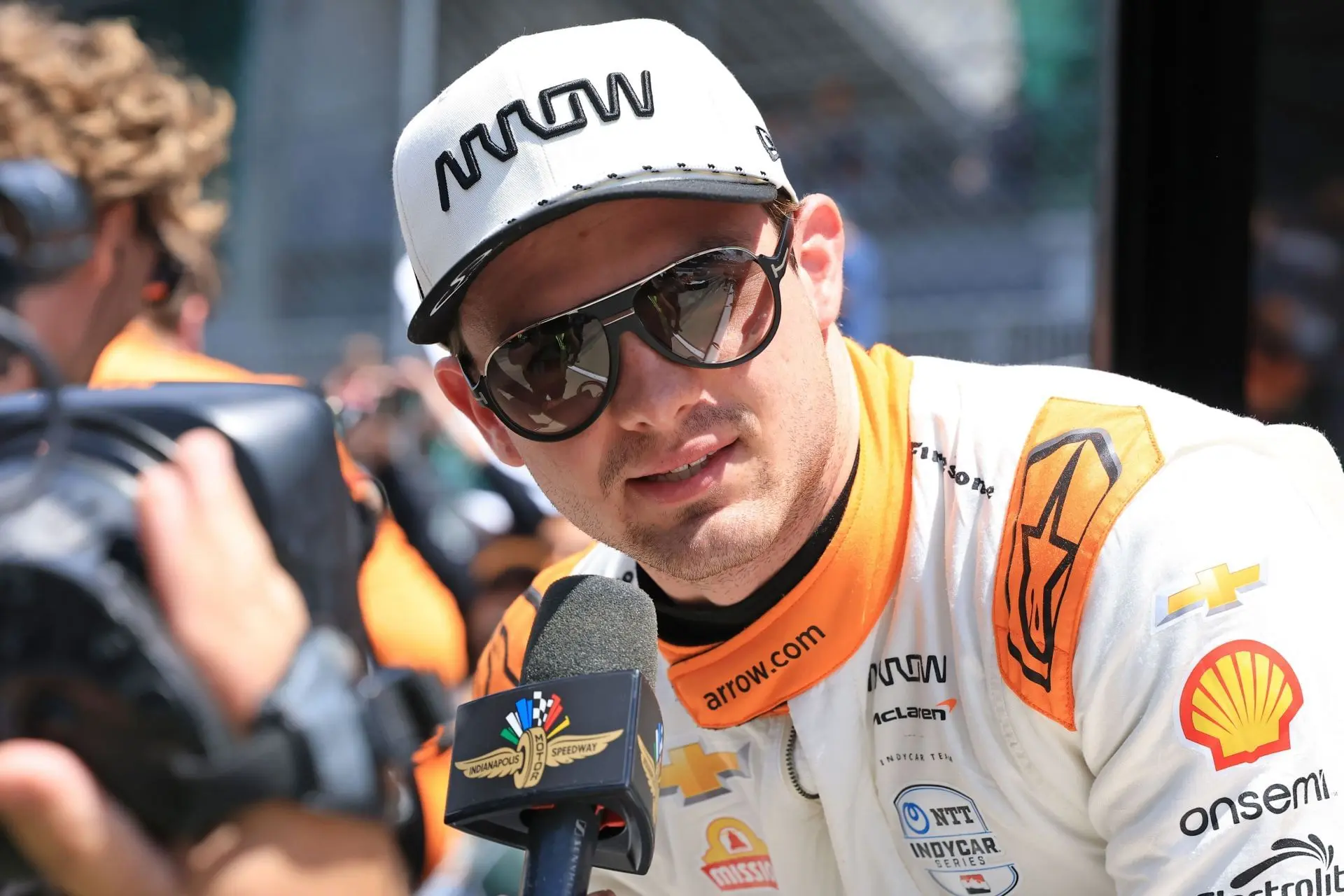
“It’s frustrating, man,” O’Ward said in a raw post-qualifying press conference, his voice laced with the disappointment of a driver who’d poured everything into that near-miss the previous year. “Those cars weren’t in regulation.
They should have been sent to the last-chance qualifier with the rest of us fighting for spots.
I feel bad for Jacob Abel and everyone who busted their asses in that session, only to see cheaters handed a free pass to the top 12.” His words hung heavy in the air, a direct shot at the arcane qualifying rules that locked in Penske’s positions based on Saturday’s speeds—speeds achieved with illegal parts.
O’Ward, who had clawed his way to a front-row start for the 2025 race, wasn’t mincing words. “They weren’t accidentally doing it because they had the blowtorch right there to get it out,” he added, referencing the frantic garage scramble to remove the offending seams once discovered.
The scandal wasn’t Penske’s first brush with controversy. Just 14 months earlier, in March 2024, the team had been engulfed in the “push-to-pass” debacle at the St. Petersburg season opener.
Engineers had reprogrammed software to allow Newgarden and McLaughlin unrestricted access to a 50-horsepower turbo boost during restarts—a maneuver explicitly banned by rule 14.19.15. Newgarden’s victory was stripped, McLaughlin demoted from third, and the team hit with points deductions and fines.
Team president Tim Cindric and managing director Ron Ruzewski were suspended for the Indy 500 that year, a punishment that foreshadowed the hammer about to fall in 2025.
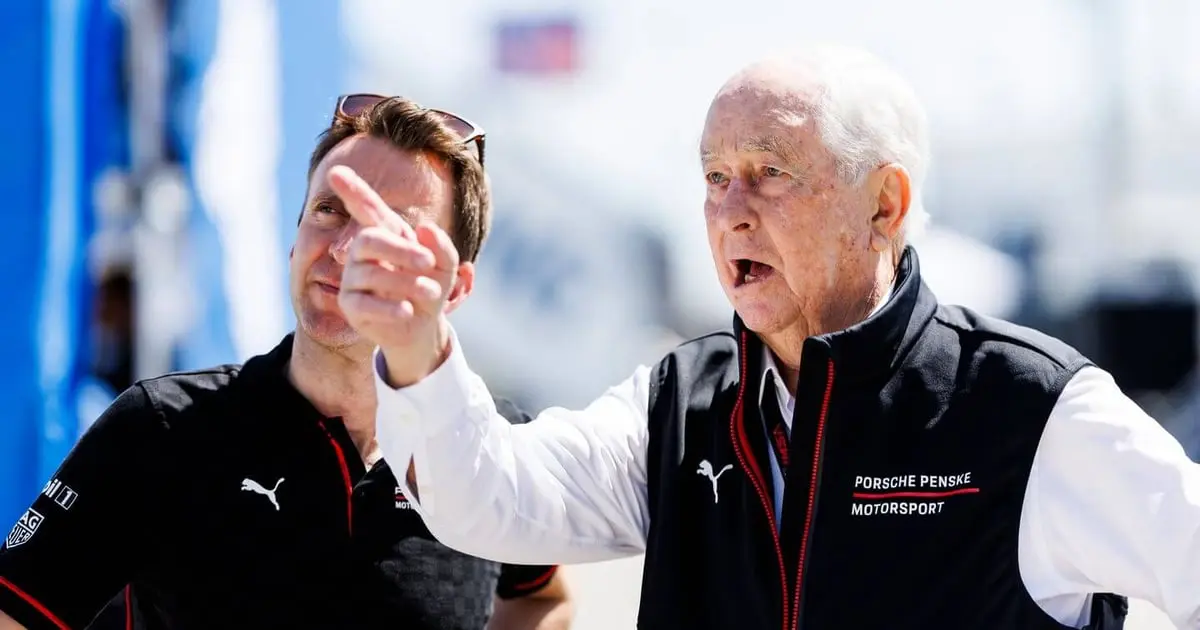
Roger Penske, the 88-year-old automotive titan who owns not just Team Penske but the entire IndyCar series and its crown jewel venue, was reportedly “devastated” by the attenuator findings.
In a move that stunned the paddock, he fired Cindric, Ruzewski, and general manager Kyle Moyer on May 21—just five days before the green flag. “Nothing is more important than the integrity of our sport and our race teams,” Penske declared in a statement.
“We have had organizational failures over the last two years, and we had to make necessary changes.
I apologize to our fans, our partners, and our organization for letting them down.” The purge left the team scrambling for interim leadership, with drivers like Power confiding in interviews about sleepless nights and fractured morale heading into “The Greatest Spectacle in Racing.”
For O’Ward, the firings were cold comfort. In exclusive footage from season 3 of “100 Days to Indy,” now streaming on Fox Nation and expanded to chronicle the full championship chase, the McLaren star unloads with trademark candor.
“It’s just simple, don’t cheat,” he says, staring directly into the camera during episode 3, a segment that peels back the curtain on the scandal’s immediate fallout. “And if you’re gonna cheat, don’t get caught—especially when you own the series.
Like, come on!” The docuseries, co-produced by Penske Entertainment and A-Frame Productions, doesn’t shy away from the tension, intercutting O’Ward’s barbs with somber reflections from Newgarden and Power.
While O’Ward absolves the drivers—”I don’t think Josef knew; they’re not in on every technical detail”—he saves his sharpest criticism for the team’s engineering culture. “We all look up to Penske; they’re the benchmark.
But what example are they setting? I wonder what other things are among those cars that we can’t see.”
The series’ unflinching portrayal has amplified calls for structural reform, exposing the inherent conflict of interest in Penske’s trifecta of control.
Rivals like Helio Castroneves, a four-time Indy 500 winner and former Penske stalwart, broke ranks to question the “optics challenge,” while Chip Ganassi Racing’s Scott Dixon and Graham Rahal voiced quiet frustrations off the record.
IndyCar president Doug Boles, a Penske loyalist elevated to the role in February 2025, acknowledged the damage in a May press briefing: “This is something Roger is going to have to address.” By November, the series announced a seismic shift: an independent governing board for 2026, severing managerial ties between Penske Entertainment and race officials.
While Penske will foot the bill for stewards and tech inspectors, they’ll report to a neutral overseer, not series brass. A new scanning system for parts compliance, piloted at Portland in August, caught four post-race impounds and promises tighter enforcement.
As the 2025 season wrapped in September, the scandal’s ripples were evident. Alex Palou clinched the championship for Ganassi, his fifth win in six races underscoring Penske’s uncharacteristic slump.
Newgarden, still chasing a three-peat at Indy, managed a gritty recovery drive from 31st to a top-10 finish but couldn’t shake the asterisk. Power, ever the battler, notched Penske’s lone victory in Portland but announced his departure before 2026, ending a 17-year run marred by the turmoil.
O’Ward, second in points with 194, enters the offseason buoyed by his front-row heroics and vocal advocacy. “Racing’s about earning it clean,” he reflected in a recent Fox Sports interview. “We push limits, but crossing that line? Nah. That’s not us.”
In “100 Days to Indy,” the scandal emerges not as a footnote but a fulcrum, humanizing the gladiators behind the wheels while indicting the empire that built the arena. For O’Ward, whose journey from a karting prodigy in Mexico to IndyCar frontrunner embodies the sport’s immigrant dream, it’s personal.
Losing 2024’s Indy 500 to a potentially tainted foe stings, but his response—blunt, principled, unyielding—reminds everyone why fans tune in. IndyCar may have survived the storm, but as Penske’s grip loosens ever so slightly, one truth endures: in the roar of 2.2-mile ovals, authenticity revs the loudest engine.
With reforms on the horizon and O’Ward’s star rising, 2026 promises a reckoning—one lap at a time.